Old Fashioned Cornbread Dressing: A Southern Holiday Classic
The turkey might get the most attention at Thanksgiving, but in many Southern households, the cornbread dressing is what everyone reaches for first. It’s the dish that gets an extra spoonful piled onto the plate, the one people ask about before dinner, and the one that somehow tastes even better with a little gravy the next day.
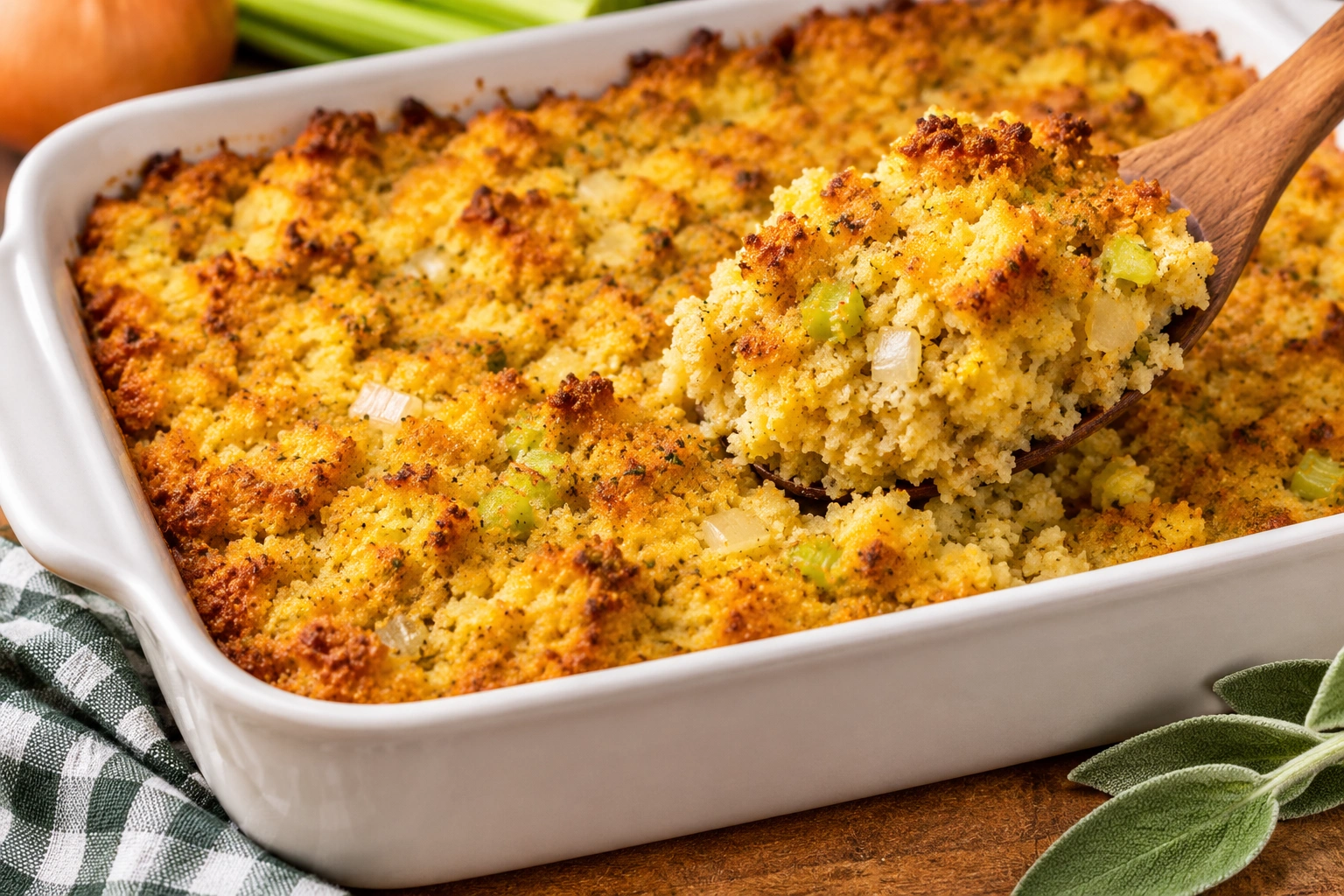
A good old fashioned cornbread dressing doesn’t need sausage, fancy ingredients, or a long list of seasonings. It starts with crumbled cornbread, onions, celery, butter, and chicken broth, just as countless home cooks have prepared it for generations. A little sage and poultry seasoning give it that familiar savory flavor, while the oven creates a lightly golden top over a moist, tender center.
What makes this Southern classic worth keeping isn’t just how it tastes. It’s how easily it fits into a holiday meal, how a few inexpensive ingredients can feed a table full of people, and how every family seems to have its own opinion about the perfect texture. Some prefer dressing soft enough to scoop with a spoon, while others insist on those slightly crisp, buttery edges.
This recipe brings both together, creating a traditional Southern cornbread dressing that’s flavorful, moist, and easy to prepare without making Thanksgiving dinner any more complicated than it needs to be.

Why Southern Cornbread Dressing Belongs on the Holiday Table
Ask a group of Southern cooks how they prepare old-fashioned cornbread dressing, and you’re unlikely to hear exactly the same answer twice. Some families add chopped boiled eggs, others prefer extra sage, and a few insist that homemade chicken stock makes all the difference. Whatever the change, the basic recipe remains the same: a savory baked casserole of cornbread, broth, vegetables and seasonings.
Cornbread dressing is usually prepared outside the turkey in the South rather than inside. This keeps the interior moist and tender while the exterior becomes crisp and golden. It can also make serving easier, especially if there are other side dishes competing for space on the Thanksgiving table.
The great thing about this recipe is its simplicity. Onions, celery, herbs, and butter means that instead of the cornbread feeling overdone by a bunch of add ins, each bite has familiar flavors. It’s hearty enough to stand beside roasted turkey but mild enough to complement the rest of the holiday menu.
What Makes Old Fashioned Cornbread Dressing Different From Stuffing?
Although people sometimes use the words dressing and stuffing interchangeably, they aren’t always prepared the same way. Stuffing traditionally cooks inside poultry, while dressing is generally baked separately in a casserole dish. There are also variations of the terminology by region/family.
Another difference between bits for southern old-fashioned cornbread dressing: texture. It’s not constructed from cubes of white bread but from crumbled cornbread soaking up some beautifully seasoned broth. This results in a softer, more cohesive stuffing than most bread recipes, and it definitely tastes corn-y.
The type of cornbread you use will dictate what the final product will be. Remember that traditional southern cornbread is less sweet, and therefore better to serve with your savory dressing. If your cornbread contains sugar, the recipe will still work, but the flavor will have a slightly sweeter finish.

Old Fashioned Cornbread Dressing
Ingredients
- 6 cups crumbled cornbread (preferably day-old)
- 2 cups chicken broth, plus more if needed
- 1/2 cup unsalted butter
- 1 medium onion, diced
- 2 celery stalks, diced
- 2 large eggs, beaten
- 1 tsp poultry seasoning
- 1 tsp dried sage
- Salt and black pepper, to taste
Instructions
- Preheat the oven. Preheat your oven to 350°F (175°C). Lightly grease a 9×13-inch baking dish with butter or cooking spray.
- Prepare the cornbread. Crumble the cornbread into a large mixing bowl. Break apart any large pieces, leaving a slightly coarse texture.
- Sauté the vegetables. Melt the butter in a skillet over medium heat. Add the diced onion and celery and cook for 6–8 minutes, stirring occasionally, until softened and fragrant.
- Combine the ingredients. Pour the sautéed vegetables and melted butter over the crumbled cornbread. Add the poultry seasoning, dried sage, salt, and black pepper. Stir gently to combine.
- Add the broth. Gradually pour in the chicken broth, stirring until the cornbread is evenly moistened. Add a little extra broth if the mixture appears too dry.
- Incorporate the eggs. Allow the mixture to cool slightly if necessary, then add the beaten eggs. Stir gently until fully incorporated.
- Transfer to the baking dish. Spoon the dressing mixture into the prepared baking dish and spread evenly without pressing it down too firmly.
- Bake. Bake uncovered for 35–45 minutes, or until the top is lightly golden brown and the center reaches 165°F (74°C).
- Rest and serve. Remove from the oven and let rest for 10 minutes before serving. Enjoy warm with roasted turkey, chicken, or your favorite gravy.
Notes
Recipe Notes
Cornbread: Day-old cornbread works best because it absorbs the broth without becoming overly mushy. Unsweetened Southern-style cornbread provides the most traditional flavor. Moisture: The amount of broth needed may vary depending on how dry your cornbread is. The mixture should be thoroughly moist but not watery. Make Ahead: Assemble the dressing up to 24 hours in advance, cover, and refrigerate. Bake until the center reaches 165°F. Storage: Refrigerate leftovers in an airtight container for up to 3–4 days. Freeze for 2–3 months for best quality. Reheating: Cover with foil and reheat at 325°F, adding a splash of chicken broth if needed, until the center reaches 165°F.Ingredients for Cornbread Stuffing From Scratch
In this classic old-fashioned cornbread dressing recipe, you’ll need 6 cups of crumbled cornbread and 2 cups of chicken broth. The cornbread provides structure, while the broth adds moisture and savory yumminess. Using flavorful broth makes a noticeable difference because the cornbread absorbs much of its taste during baking.
You’ll also need ½ cup of melted butter, 1 diced medium onion, and 2 diced celery stalks. Cooking the vegetables in butter before adding them to the cornbread softens their texture and brings out their natural flavor. This small preparation step helps prevent firm pieces of celery or sharp-tasting onion from standing out in the finished casserole.
To bind and season the dressing, use 2 beaten eggs, 1 teaspoon of poultry seasoning, 1 teaspoon of dried sage, and salt and black pepper to taste. The eggs help the mixture to set without making it heavy, and the herbs provide the familiar Thanksgiving dressing flavor. Poultry seasoning already has sage in there, so some extra sage will amp up that herbal smack.
Cooking Cornbread Stuffing Traditional
Preheat the oven to 350 degrees F and spray a 9 x 13 baking dish with cooking spray. Crumble the prepared cornbread into a large mixing bowl, leaving a few slightly larger pieces for texture. If possible, use cornbread that was baked the previous day because slightly dried cornbread absorbs broth more evenly.
Heat a large skillet over medium heat and add the butter to melt. Add the diced onion and celery, stirring occasionally for about 6 to 8 minutes until the vegetables soften. You don’t need to brown them; the goal is to develop their flavor while keeping them tender.
Pour the sautéed vegetables and melted butter over the crumbled cornbread. Add the poultry seasoning, dried sage, salt, and black pepper, then gently stir until everything is distributed throughout the mixture. Slowly pour in the chicken stock, stirring until the cornbread is really soaked.
If the mixture is hot, allow it to cool slightly, then stir in the beaten eggs until combined. The dressing should be moist enough to hold together but not swimming in liquid. If your cornbread is unusually dry, a little additional broth may be needed to reach the proper consistency.
Scoop the mixture into the prepared baking pan and spread it evenly (don’t pack it down). Bake uncovered for approximately 35 to 45 minutes, until the top is lightly golden and the center reaches 165°F. Let the dressing rest for about 10 minutes before serving so it can settle while remaining tender.
How to Make Moist Cornbread Dressing Without Making It Soggy
The difference between excellent cornbread dressing and a disappointing batch often comes down to moisture. Too little broth produces dry, crumbly dressing, while too much can leave the center heavy and mushy. Finding the right balance begins before the casserole ever reaches the oven.
After adding the broth, pay attention to how the cornbread looks and feels. The crumbs should be evenly damp, with no large pockets of dry bread remaining. However, you shouldn’t see liquid collecting at the bottom of the mixing bowl.
The baking dish also affects the final texture. A wider dish allows more surface area to develop those desirable golden edges, while a deeper casserole tends to produce a softer center. For this recipe, a 9-by-13-inch dish provides a good balance between the two.
Finally, avoid leaving the dressing in the oven longer than necessary. Once the eggs have cooked through and the surface has developed some color, additional baking can gradually remove the moisture you’ve worked to preserve.
Why Sage and Poultry Seasoning Matter
Sage is one of the ingredients most closely associated with traditional Southern cornbread dressing. Its earthy, slightly peppery flavor complements the natural sweetness of cornmeal and the richness of butter. A bit goes a long way to bringing that holiday flavor into the casserole.
Another flavor enhancer is poultry seasoning, a blend of herbs such as thyme, sage, rosemary, and marjoram. These seasonings can combine to round out the flavor of the dressing without digging through several spice jars. They do roasted fowl and chicken stock well.
Still, seasoning preferences vary considerably from one household to another. If you enjoy a stronger sage flavor, you may prefer a slightly more generous amount, while those who favor milder dressing can reduce it. The important thing is allowing the cornbread to remain the main ingredient rather than overwhelming it with herbs.
What to Serve With Southern Cornbread Dressing
Roasted turkey and homemade gravy are natural companions for Southern cornbread dressing. The tender casserole absorbs a little gravy beautifully, creating a satisfying combination of buttery cornbread and savory roasted flavors. Baked ham and roasted chicken are equally good choices when Thanksgiving isn’t on the calendar.
For a traditional holiday spread, add mashed potatoes, sweet potato casserole, cranberry sauce, and a green vegetable dish. If you’re planning your menu, my Classic Green Bean Casserole: A Creamy, Crispy Holiday Side Dish is an excellent recipe to serve alongside this dressing. The creamy green beans and crisp onion topping offer a delicious contrast to the soft, herb-seasoned cornbread.
You can also serve this homemade cornbread dressing for an ordinary Sunday dinner. Pair it with oven-roasted chicken and sautéed vegetables for a filling meal that doesn’t require preparing an entire holiday feast. It’s a practical way to enjoy a traditional favorite throughout the year.
Can You Prepare Cornbread Dressing Ahead of Time?
Holiday cooking becomes much easier when some of the preparation is finished before guests arrive. Fortunately, cornbread dressing lends itself well to advance planning, especially because the cornbread can be baked ahead. In fact, day-old cornbread is often preferable for this recipe.
You can bake the cornbread one or two days before assembling the casserole, then store it properly until needed. The onion and celery can also be chopped in advance and refrigerated in a covered container. These small preparations make assembling the dressing much quicker on Thanksgiving morning.
If you want to prepare the complete mixture ahead of time, combine the ingredients, transfer everything to the baking dish, and refrigerate promptly. Keep it covered at 40°F or below and bake within 24 hours. Since a refrigerated casserole takes longer to heat through, rely on an internal temperature of 165°F rather than the baking time alone.
How to Store and Reheat Leftover Cornbread Dressing
Leftover cornbread dressing makes an easy addition to meals after Thanksgiving. Once dinner is finished, transfer the remaining dressing into shallow airtight containers and refrigerate it within two hours. Properly stored leftovers can be kept in the refrigerator for 3 to 4 days.
For reheating, place a portion in an oven-safe dish and add a small splash of chicken broth if it appears dry. Cover with aluminum foil and warm in a 325°F oven until heated through to 165°F. Covering the dish helps retain moisture, particularly around the edges.
Cornbread dressing can also be frozen after baking. Divide it into convenient portions, place them in freezer-safe containers, and freeze for up to 2 to 3 months for the best quality. Thaw overnight in the refrigerator before reheating.
A Traditional Recipe Worth Keeping
Not every holiday recipe needs a modern twist or an unexpected ingredient to deserve a place on the table. Sometimes, the combination people have enjoyed for decades is exactly what makes a dish worth preparing. Old fashioned cornbread dressing is a perfect example of how ordinary pantry staples can become a memorable part of a family meal.
As simple as some buttery cornbread, some tender veggies and some fragrant sage and a delicious crunchy golden top and some rustic southern cooking. It’s straightforward enough for someone making dressing for the first time, yet traditional enough to satisfy those who grew up eating it every Thanksgiving.
Serve it warm beside your favorite holiday dishes, save a little for the next day’s leftovers, and don’t be surprised when someone asks you to make it again. After all, the recipes that return to the table year after year are often the ones that never needed changing.