Classic Sausage Stuffing: A Savory Thanksgiving Favorite
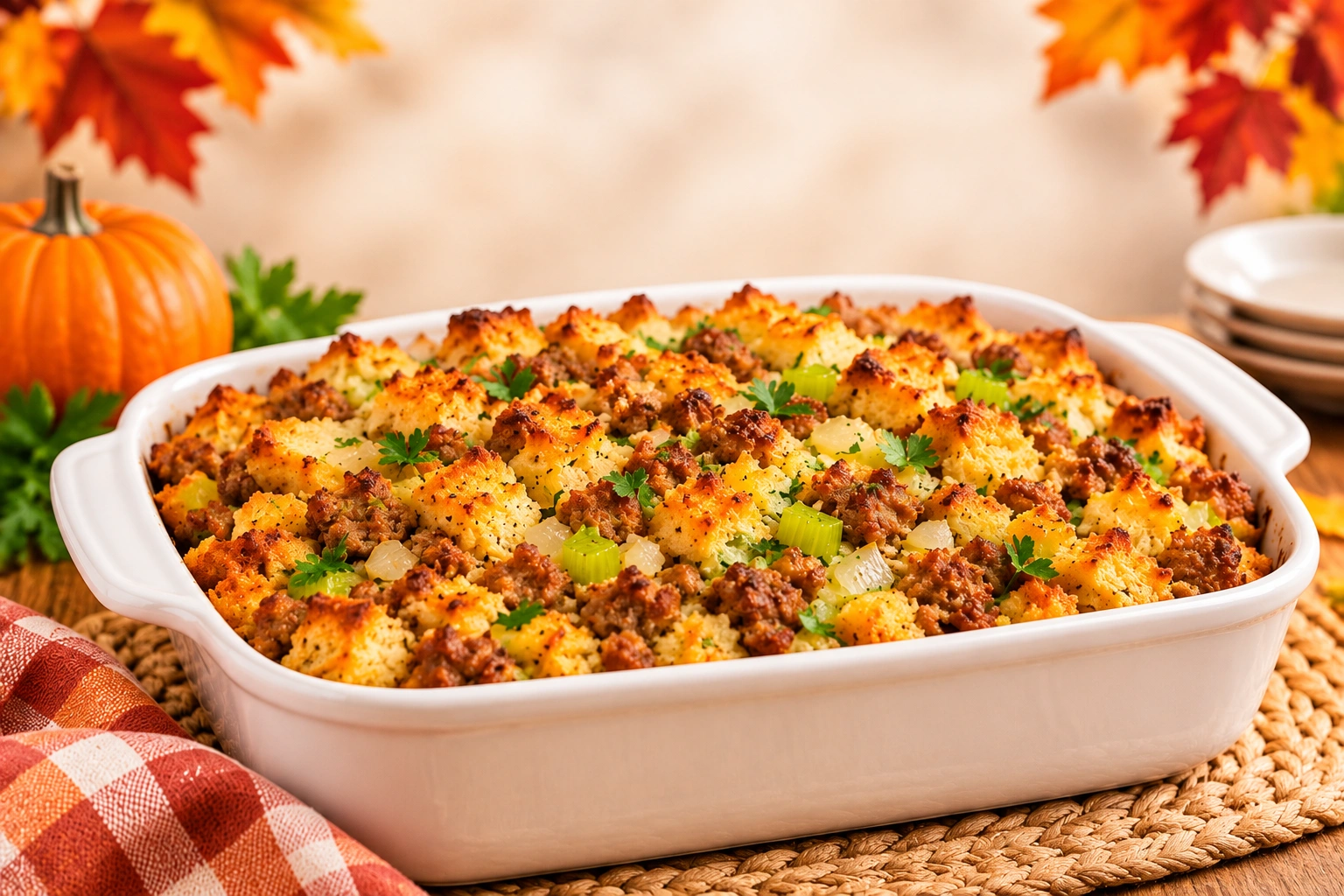
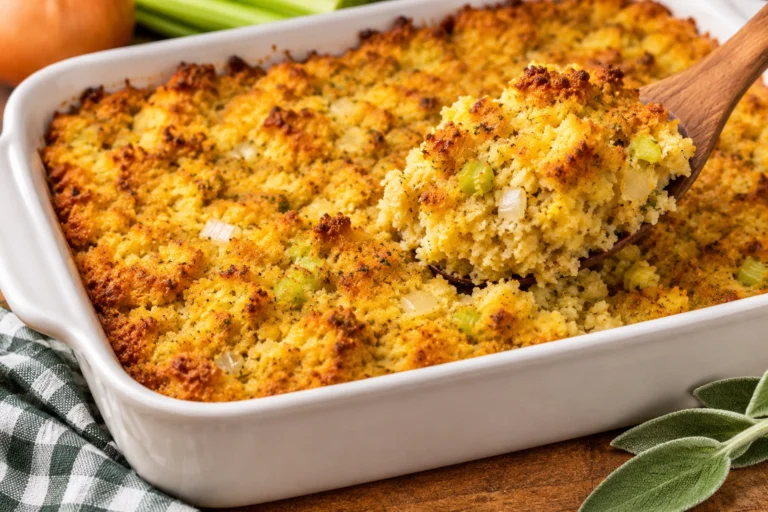
The Thanksgiving table can be crowded with beautiful dishes, but stuffing has a way of attracting attention before anyone sits down. A spoon breaks through the golden surface, revealing tender bread cubes, browned sausage, and little pieces of celery and onion tucked between the layers. Then comes the aroma of sage, garlic, and warm poultry seasoning, which makes the kitchen smell like holiday dinner is finally ready.
This Classic Sausage Stuffing recipe brings together Italian sausage, day-old bread, fresh vegetables, and savory herbs in one generously filled baking dish. The top will be crispy, toasted but will be moist enough on the inside to hold together but not heavy and soggy. Serve this Thanksgiving side with gravy over roasted turkey and traditional holiday veggies.
What I love about this recipe is how it takes your basic pantry ingredients and turns them into something that you can really sink your teeth into with tons of different flavors and textures. The sausage adds richness, the vegetables bring a gentle sweetness, and the bread absorbs the seasoned chicken broth without losing its structure. Every forkful offers a little of everything, making this stuffing just as appealing alongside a simple roast chicken as it is at Thanksgiving.

What Makes Classic Sausage Stuffing Different?
Traditional bread stuffing often relies on herbs, butter, onions, and celery for its flavor. The Italian sausage alters the dish by adding savory browned meat throughout the bread mixture. As the sausage cooks, it develops flavorful bits that complement the vegetables and seasonings.
Unlike stuffing prepared inside a turkey, this version bakes separately in a casserole dish. That gives the top direct exposure to the oven’s heat, allowing the bread cubes to become golden and slightly crisp. Meanwhile, the covered portion of the baking time helps keep the interior tender.
The recipe also uses both chicken broth and beaten eggs to bring the ingredients together. The broth moistens the bread, while the eggs help the stuffing hold together as it bakes. With the right balance, the finished casserole is moist but never swimming in liquid.
Choosing Bread That Holds Its Shape
The foundation of this Classic Sausage Stuffing is 12 cups of day-old bread cubes. Bread that has had time to dry out absorbs the broth more evenly and is less likely to collapse into a paste. French bread, Italian bread, or a sturdy white sandwich loaf can all work, although each creates a slightly different texture.
If your bread is still fresh, cut it into cubes and spread them across baking sheets to dry. You can leave them uncovered for several hours or gently toast them in a low oven until they feel dry rather than browned. Allow the cubes to cool before combining them with the other ingredients.
The size of the cubes also matters because very small pieces tend to soften quickly. Pieces measuring approximately three-quarters of an inch to one inch provide a good balance between tender centers and recognizable bread texture. When the casserole comes out of the oven, those distinct pieces make each serving look inviting rather than compact.
How Italian Sausage Builds a Richer Flavor
One pound of mild Italian sausage gives this recipe its savory backbone. As it browns in a skillet, the meat develops caramelized edges and releases flavorful juices that help season the finished stuffing. Mild sausage is especially good here because it will add flavor to the herbs but shouldn’t make them too spicy.
As the sausage is cooking, crumble it into small pieces so it is dispersed evenly throughout the casserole. Cook the meat until it’s browned and cooked all the way through, draining off any excess grease. You don’t want a greasy bread mixture, but you want to keep the flavor of the sausage.
If you’ve never cooked with Italian sausage, it’s not just a meaty punch, because the sausage is already nicely seasoned. Its tasty flavor combines with the poultry seasoning and the dry sage and thyme to form a nice, all-purpose holiday accompaniment. Even those who usually favor plain bread stuffing will probably enjoy the extra depth.
The Vegetables and Herbs Behind the Flavor
Onion, celery, and garlic create that traditional holiday stuffing flavor. In this recipe, the bread is flavored with a savory blend of 1 large onion (diced), 3 stalks of celery (diced), and 3 cloves of garlic (minced). Cooking these ingredients prior to mixing softens and blends the flavors.
Melt 1/2 cup of unsalted butter in a large skillet, then add celery and onion. Cook, stirring occasionally, until tender, about 6-8 minutes. Stir in the minced garlic and cook for approximately 30 seconds, or until fragrant.
1/2 teaspoon of black pepper, 1/2 teaspoon of salt, 1 tsp of dried thyme, 1 tsp of dried sage, 2 tsp poultry seasoning. These ingredients lend old-fashioned herbal flavor to the Thanksgiving stuffing. Fresh parsley, added toward the end of preparation, contributes a brighter note that keeps the finished dish from tasting overly rich.
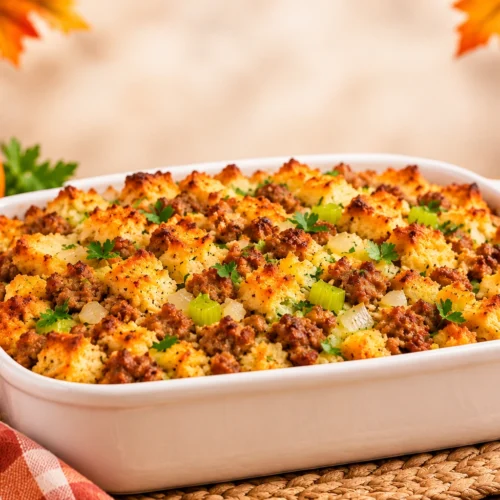
Classic Sausage Stuffing
Ingredients
- 12 cups day-old bread cubes
- 1 lb mild Italian sausage, casings removed
- 1/2 cup unsalted butter
- 1 large onion, diced
- 3 celery stalks, diced
- 3 garlic cloves, minced
- 2-2 1/2 cups low-sodium chicken broth
- 2 large eggs, beaten
- 2 tsp poultry seasoning
- 1 tsp dried sage
- 1 tsp dried thyme
- 1/2 tsp salt
- 1/2 tsp black pepper
- 1/4 cup fresh parsley, chopped
Instructions
- Preheat the oven: Preheat the oven to 350°F (175°C). Lightly grease a 9×13-inch baking dish.
- Prepare the bread: Place the day-old bread cubes in a large mixing bowl. If using fresh bread, dry the cubes in a 250°F oven for approximately 20–30 minutes, then allow them to cool.
- Cook the sausage: In a large skillet over medium heat, cook the Italian sausage, breaking it into small pieces, until browned and fully cooked, approximately 8–10 minutes. Drain excess grease and transfer to a plate.
- Sauté the vegetables: In the same skillet, melt the butter. Add the diced onion and celery and cook for 6–8 minutes until softened. Stir in the minced garlic and cook for another 30 seconds.
- Combine the ingredients: Add the cooked sausage and sautéed vegetables to the bread cubes. Sprinkle with poultry seasoning, sage, thyme, salt, black pepper, and chopped parsley. Toss gently to combine.
- Add the broth and eggs: In a separate bowl, whisk together the beaten eggs and 2 cups of chicken broth. Gradually pour over the bread mixture, tossing gently until evenly moistened. Add up to ½ cup additional broth if needed. The bread should be moist but not soggy.
- Transfer to baking dish: Spoon the stuffing into the prepared baking dish, spreading it evenly without pressing it down too firmly.
- Bake covered: Cover with aluminum foil and bake for 25 minutes.
- Bake uncovered: Remove the foil and continue baking for 10–20 minutes until the top is golden brown and crispy and the center reaches 165°F (74°C).
- Rest and serve: Remove from the oven and let rest for 5–10 minutes. Garnish with additional fresh parsley if desired and serve warm.
Notes
Notes
Bread: French bread, Italian bread, or sturdy white bread works best. Day-old bread absorbs broth without becoming mushy. Sausage: Mild Italian sausage provides a classic savory flavor. Sweet or hot Italian sausage can also be used. Moisture: Start with 2 cups of chicken broth and gradually add more as needed. Avoid oversaturating the bread. Make Ahead: Cook the sausage and vegetables up to one day ahead. Refrigerate separately from the dried bread cubes and combine with the broth and eggs just before baking. Storage: Refrigerate leftovers in an airtight container for up to 3–4 days. Reheat thoroughly to 165°F. Freezing: Freeze fully cooked and cooled stuffing in an airtight freezer-safe container for up to 2–3 months for best quality.How to Make Classic Sausage Stuffing
Begin by preheating the oven to 350°F and greasing a large baking dish. Place the 12 cups of day-old bread cubes in a spacious mixing bowl so there is enough room to combine the ingredients without crushing the bread. Having everything prepared before mixing makes the process much easier.
In a medium hot skillet, brown the mild Italian sausage (breaking it apart as it cooks). When the sausage is fully cooked, set it aside on a plate. In the same skillet, melt the butter and sauté the diced onion and celery until tender, then add the garlic for the final 30 seconds.
Add the cooked sausage and softened vegetables to the bowl of bread cubes. Sprinkle in the poultry seasoning, sage, thyme, salt, black pepper, and a quarter cup of chopped fresh parsley. Gently toss the ingredients until the seasonings and vegetables are distributed throughout the bread.
In a separate bowl, beat two large eggs and combine them with two to two and a half cups of low-sodium chicken broth. Between each addition of liquid, gently stir the bread mixture. Bread should be wet but not sopping or swimming in any excess liquid.
Scoop batter into pan and smooth out, do not pack down too hard. Cover the dish with aluminum foil and bake for 25 minutes, allowing the center to heat and the bread to absorb the seasoned moisture. Remove the foil and continue baking for another 10 to 20 minutes, until the top becomes golden and the center reaches 165°F.
Getting the Moisture Right Without Making Stuffing Soggy
The amount of chicken broth can make a noticeable difference in the final texture. Although the recipe allows two to two and a half cups, it’s better to begin with the smaller amount and add more only if needed. Different types of bread absorb liquid at different rates, particularly when some cubes are drier than others.
After adding the first two cups, gently lift a few bread cubes with a spoon and check their texture. They should be moist and soft yet able to maintain shape. If large sections remain dry, add a little more broth and fold again until the mixture is evenly moistened.
Another important detail is how firmly the stuffing is placed into the baking dish. Pressing everything down creates a denser casserole with fewer crisp edges. A loosely arranged mixture allows the heat to circulate around the upper bread cubes, producing a more interesting combination of textures.
Why the Covered and Uncovered Baking Stages Matter
Stuffing to be baked in two rounds for Classic Sausage Stuffing prevents the top from drying out before the center is warm. The bread, eggs, and broth will bake together for the first 25 minutes, with the moisture sealed in by the foil. This comes in handy when you’re preparing a large casserole for a holiday meal.
Withdraw the foil, and the bread will begin to cook and go golden. The sausage pieces toward the top may crisp up slightly, but the vegetables beneath will be tender. This final step of baking will result in that nice moist inside and slightly crisp top to the casserole.
Serve the cabbage and cooked sausage once the center registers at 165°F. Rest for 5 to 10 minutes after baking. A short rest will ensure that you can serve without pulling the entire casserole apart.
Southern Holiday Favorites Sausage Stuffing
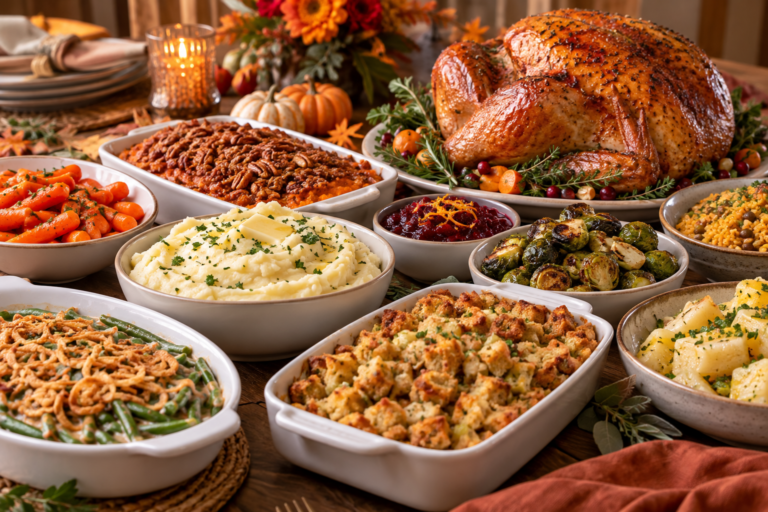
For a holiday plate of foods that present differently texturally, sausage stuffings make a nice textural element within a side. It also pairs well with baked ham, roasted turkey, cranberry sauce, and green beans. The sauce’s slight sweetness also contrasts nicely with the sausage and herbs.
Old Fashioned Cornbread Dressing (A Traditional Holiday Favorite) My recipe for cornbread dressing is just that traditional Southern holiday classic. The flavor- and texture-burst of cornbread dressing is a tasty invention to keep in mind as you work out your Southern-style Thanksgiving dinner menu! Both recipes use traditional holiday spices, but the type of bread used gives each dressing a distinct flavor.
Having both dishes ready is convenient if you are cooking for a large family with guests of different tastes. Some love the crumbly softness of cornbread dressing, while others love the smashed bread cubes and browned sausage in this recipe. Either way, the dishes complement many of the same holiday main courses.
Preparing Sausage Stuffing Ahead of Thanksgiving
When several dishes need oven space on Thanksgiving Day, preparing ingredients ahead of time can simplify the schedule. The bread can be cubed and dried in advance, while the sausage and vegetable mixture can be cooked, cooled, and refrigerated separately. Separating ingredients also helps to prevent the bread from getting too moist before baking.
Mix together your seasoned prepared ingredients and the beaten eggs and chicken stock on the day you are serving. Pour the mixture into the casserole dish and bake as directed. If you’ve taken it cold from the fridge, it will probably take a little extra time to get the casserole to the right internal temperature.
Leftover stuffing should be refrigerated within two hours of cooking and stored in a covered container. It can generally be kept in the refrigerator for three to four days. When reheating, add a small splash of chicken broth if necessary and heat the stuffing thoroughly to 165°F.
The Best Part of Serving Stuffing Family-Style
A large casserole dish of sausage stuffing encourages the kind of relaxed serving that works so well at a family holiday meal. Some guests will scoop from the center to get the softest bread, while others will look for the golden pieces along the edges. The mixture of textures means every serving can be slightly different.
For presentation, a little additional chopped parsley scattered over the top adds freshness and color. Serve the stuffing directly from its baking dish while it is still warm, with a large spoon that can reach through the crispy topping into the tender center. There is no need for elaborate garnishes when the browned sausage and golden bread already make the dish look appetizing.
And when the main meal is finished, this stuffing deserves a place among the leftovers worth saving. This is far superior to your Thanksgiving dinner crowd-pleaser stuffed with seasoned bread, Italian sausage, and herby veggies. Enjoy the hearty familiar flavor of Classic Sausage Stuffing on the holiday table with roasted turkey or hand them out the next day.