Garlic Herb Butter Turkey Recipe for a Juicy, Flavorful Holiday Dinner

There is a particular moment during Thanksgiving preparation when a plain turkey begins to look like the centerpiece everyone has been waiting for. It’s what happens when buttery butter meets fresh chopped herbs, herby garlic, and bright lemon zest to create a blend more fragrant than you need to fill your home with the scent of the holiday season without ever turning on the oven. As that seasoned butter is worked beneath the turkey’s skin, an ordinary bird begins its transformation into something special.
This Garlic Herb Butter Turkey recipe is built around a handful of ingredients that complement the natural flavor of roasted turkey rather than overpowering it. Rosemary provides a characteristic woody aroma, thyme gives a more earthy flavor, and parsley gives a fresh flavor. Meanwhile, garlic, lemon zest, and butter give well-seasoned meat and golden, flavorful skin.
Roasting a turkey can be intimidating, but there are a few key steps that can help take the edge off that. There’s a reason for everything from preparing the herb butter to testing the internal temperature of the turkey. With a little planning, you can serve a Thanksgiving turkey that looks impressive without making the cooking process unnecessarily complicated.

Why Garlic Herb Butter Turkey Works So Well
Butter does more than add richness to roasted turkey. It’s an easy way to spread flavor around the bird and under the skin when combined with herbs and seasonings. This will give the breast meat some flavor and also help the outside to achieve a lovely golden color.
Rosemary, thyme, and parsley makes for a great all-purpose herb blend. Rosemary is quite bold, and thyme has a subtle savory taste. The parsley softens the taste and mellows the sting of a single herb.
Another key ingredient is lemon zest, which adds a burst of flavor with just the right amount of moisture. The zest adds aromatic oils that are lovely pulsed into softened butter, unlike lemon juice. Which leaves a nice mellow citrus note on the turkey which is nice with the garlic and herbs.
However, butter alone won’t create a juicy turkey. Cooking temperature control, resting the meat, and roasting are just as equally essential. Together, these techniques help prevent the breast from becoming dry while the darker meat finishes cooking.
Ingredients for Garlic Herb Butter Turkey
For this recipe, use a 12–14-pound whole turkey, preferably fully thawed and not pre-brined or heavily pre-seasoned. This size is manageable for a standard roasting pan and generally provides enough meat for approximately eight to ten people, depending on portions and side dishes. The measurements below create enough herb butter to season the turkey beneath and over the skin.
For the garlic herb butter, you will need 1 cup (2 sticks) of unsalted butter, softened to room temperature, along with 8 garlic cloves, finely minced. Next, stir in 2 tbsp chopped parsley, 2 tbsp fresh chopped rosemary, and 1 tbsp fresh thyme leaves. You will also need 2 teaspoons of finely grated lemon zest, 2 teaspoons of kosher salt, and 1 teaspoon of freshly ground black pepper.
These salt measurements are intended for a natural, unbrined turkey and may need adjustment depending on the salt brand. If your turkey is labeled self-basting, enhanced, kosher, or pre-brined, check the packaging before adding salt because the bird may already contain a substantial amount. Using unsalted butter gives you better control over the final seasoning.
This recipe calls for fresh herbs due to the herbs making for a more fragrant coupling with the butter. If you don’t have fresh herbs, dried herbs can do the job in smaller quantities. For the best texture, finely chop the herbs so they spread evenly without forming large clumps beneath the skin.
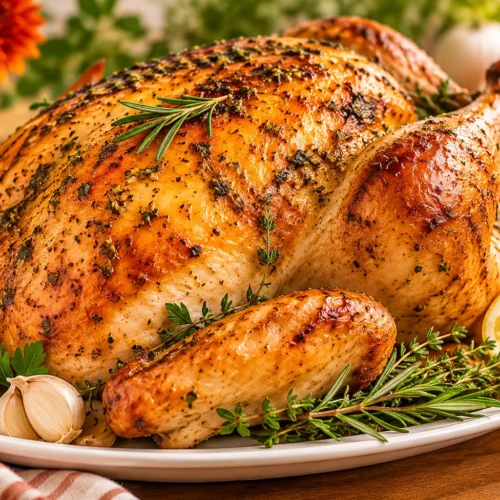
Garlic Herb Butter Turkey – Recipe Card
Ingredients
- 1 whole turkey (12–14 pounds), completely thawed, unbrined
- 1 cup (2 sticks) unsalted butter, softened
- 8 garlic cloves, finely minced
- 2 tbsp fresh rosemary, finely chopped
- 2 tbsp fresh parsley, finely chopped
- 1 tbsp fresh thyme leaves
- 2 tsp fresh lemon zest
- 2 tsp kosher salt (adjust for salt type)
- 1 tsp freshly ground black pepper
Instructions
- Prepare the turkey.Preheat the oven to 325°F (163°C). Remove the neck and giblets from the completely thawed turkey. Pat the turkey dry with paper towels. Do not rinse raw poultry.
- Make the Garlic Herb ButterIn a mixing bowl, combine softened butter, minced garlic, rosemary, parsley, thyme, lemon zest, salt, and black pepper. Mix until evenly incorporated.
- Loosen the Turkey SkinCarefully slide your fingers beneath the skin covering the turkey breasts. Gently separate the skin from the meat without tearing it.
- Apply the herb butter.Spread approximately half of the herb butter underneath the breast skin. Massage gently to distribute it, then rub the remaining butter over the outside of the turkey, including the legs and wings.
- Prepare for RoastingPlace the turkey breast-side up on a roasting rack inside a roasting pan. Tuck the wing tips underneath the turkey if desired. Leave the cavity unstuffed.
- Roast the TurkeyRoast at 325°F for approximately 3–3¾ hours for a 12–14-pound unstuffed turkey. If the skin browns too quickly, loosely cover the affected areas with aluminum foil.
- Check the Internal TemperatureUse a meat thermometer to check the thickest part of the breast, innermost thigh, and innermost wing area without touching bone. All three areas must reach at least 165°F (74°C).
- Rest Before CarvingRemove the turkey from the oven and transfer it to a clean carving board. Rest for 20–30 minutes before slicing and serving.
Notes
Recipe Notes
Turkey size: This recipe is designed for a 12–14-pound whole turkey. Cooking times will vary for larger or smaller birds. Salt adjustment: If using a pre-brined, enhanced, self-basting, or kosher turkey, check the packaging and reduce or omit the added salt as appropriate. Make ahead: Prepare the garlic herb butter up to two days in advance and refrigerate. Allow it to soften before using. Storage: Refrigerate cooked turkey within two hours and use within 3–4 days. Reheat leftovers to 165°F. Food safety: Always rely on internal temperature rather than cooking time or skin color to determine doneness.Preparing the Turkey Before Roasting
The first step begins well before the oven is preheated. A frozen turkey needs adequate time to thaw safely in the refrigerator, allowing approximately 24 hours for every four to five pounds. For a 12–14-pound turkey, plan on roughly three to four days of refrigerator thawing.
Once thawed, remove the turkey from its packaging and take out the neck and giblets from the cavities. Place the bird on a clean work surface or inside a roasting pan, then pat the skin thoroughly dry with paper towels. There is no need to rinse raw turkey, since splashing water can spread bacteria around the kitchen.
Drying the skin is particularly important because excess surface moisture interferes with browning. At the same time, a dry surface makes it easier to spread the softened herb butter. Keep the turkey refrigerated until you are ready to prepare and roast it, and wash your hands and any surfaces that contact raw poultry.
How to Make Garlic Herb Butter for Turkey
Begin by placing the softened butter in a medium mixing bowl. Add finely chopped garlic, parsley, black pepper, salt, lemon zest, rosemary, and thyme. Use a fork or spatula to mix the herbs / seasonings thoroughly into the butter mixture.
The finished mixture should be soft enough to spread but not melted. If the butter is too firm, it may tear the delicate turkey skin as you work underneath it. On the other hand, completely melted butter will run off the surface rather than staying where you want it.
Before applying the mixture, take a moment to notice its texture and fragrance. The chopped herbs should appear throughout the butter, while the garlic and lemon zest create a fresh, savory aroma. This simple preparation is what gives the finished turkey much of its distinctive flavor.
How to Season a Whole Turkey with Herb Butter
Starting at the neck end of the breast, carefully slide your fingers beneath the turkey skin to loosen it from the meat. Work slowly, creating space over both breast sections without tearing the skin. A small silicone spatula can help if you find it difficult to reach certain areas.
Spread approximately half of the prepared garlic herb butter directly over the breast meat beneath the skin. Gently massage the outside of the skin to distribute the mixture into an even layer. This puts the seasonings close to the meat so it can taste the meat as it roasts.
Then coat the rest of the butter on the outside of the turkey (breast, legs, wings). Use the final portion to season accessible areas around the thighs and cavity opening. If desired, tuck the wing tips underneath the bird to help protect them from excessive browning.
Place the turkey breast-side up on a roasting rack inside a sturdy roasting pan. Avoid tightly packing the cavity with stuffing, since that complicates cooking and temperature monitoring. For this recipe, leaving the cavity unstuffed allows the turkey to roast more predictably.
Garlic Herb Butter Roast Turkey
Place the lowest shelf into your oven and set it to reach 325 degrees F (163 degrees C) so that you can easily access your turkey. Once the oven has reached the right temperature, put the pan in, breast side up.You can also keep an eye on it with an oven-safe meat thermometer placed into the thickest part of the breast.
A 12–14-pound unstuffed turkey will often take approximately 3 to 3¾ hours at this temperature. But there’s no one-size-fits-all for roasting; much depends on your bird’s shape, the oven, how you thawed the turkey, and all sorts of other factors. So plan your timing around this but let this not be the ultimate guide of dictating whether the turkey is ready or not.
The butter will melt into the pan as the turkey roasts and will combine with the natural juices from the turkey. The herbs and garlic gradually release their aroma, while the skin begins developing a deeper golden color. If the breast or other exposed areas brown too quickly, loosely cover those sections with aluminum foil.
You do not need to repeatedly open the oven to baste the turkey. Frequent basting can lower the oven temperature and extend the cooking time, while also making the skin less crisp. Instead, watch the temperature during roasting (and keep the oven door closed as much as possible).
How to Make Sure Your Turkey is Done
The best way to tell if the turkeys are done is to use a food thermometer. You’ll want the thickest part of the breast, thigh, and wing to be 165 degrees Fahrenheit (74 degrees Celsius). Be sure not to allow the probe of the thermometer to come into contact with bones, or the reading will be affected.
Monitor the temperature before the estimated roasting time. If the breast has been brought up to temp but the thigh hasn’t even hit 165°F yet, loosely hook some foil around the breast and put it back in the oven. Before removing the bird from the oven, make one last sweep of the areas that you need.
Once the turkey is finished, remove it to a clean platter or carving board. Cover loosely with foil (if desired) and allow to rest for 20-30 minutes before carving. Resting allows the meat to settle and makes carving easier, while giving you time to finish the remaining dishes.
Tips for Golden Skin and Tender Turkey Meat
One of the biggest differences between an attractive roasted turkey and a disappointing one is moisture management. Thoroughly drying the skin before applying the herb butter helps encourage browning. Likewise, roasting on a rack allows heat to circulate around the bird instead of leaving its underside sitting directly in the pan juices.
Another helpful technique is keeping the garlic finely minced. Large garlic pieces on the outside of the turkey may become overly dark during a long roast. Smaller pieces blend more smoothly into the butter and distribute their flavor more evenly.
It is also important not to assume that a darker skin color means the meat is fully cooked. Some turkeys brown quickly because of their butter coating, while others take longer to develop the same appearance. The thermometer, rather than the color of the skin or juices, should guide your final decision.
Lastly, don’t succumb to the urge to cut the turkey in the oven. Although the aroma may make waiting difficult, a short resting period improves the carving experience. Use those minutes to warm your serving dishes and arrange the rest of the meal.
What to Serve with Garlic Herb Butter Turkey
A turkey seasoned with rosemary, garlic, thyme, and lemon pairs especially well with traditional Thanksgiving accompaniments. The roasted veggies add color and texture, and the smooth, creamy mashed potatoes are a bright contrast to the savory herb butter. The tart and sweet flavor of the cranberry sauce complements the meatiness of the duck meat.
The turkey may be the main course of the holiday dinner, but it’s equally as important to plan side dishes. Some dishes can be prepped or cooked ahead of time, freeing up some air space and attention on Thanksgiving Day. Check out our 10 Thanksgiving Side Dishes You Can Make Ahead for some real-life menus, and choose a few from that that are indicative of your family’s tastes.
The green vegetable can be a refreshing contrast to the main dish. Roasted brussel sprouts, green beans, or a seasonal salad will complement the herb flavors instead of clashing. It’s a filling meal, but somehow balanced.
Can You Prepare Herb Butter Turkey Ahead of Time?
The garlic herb butter can be prepared up to two days in advance and stored in an airtight container in the refrigerator. Before using it, allow it to soften enough to spread easily. This small step saves preparation time on the day you plan to roast the turkey.
You can also season the thawed turkey beneath and over the skin the evening before cooking. Place it in a roasting pan, cover it appropriately, and keep it refrigerated at 40°F or below until roasting time. This allows you to complete one of the messier preparation tasks before the holiday kitchen becomes busy.
However, do not leave raw turkey sitting at room temperature for an extended period. Keep it refrigerated until you are ready to put it into the oven. Planning ahead should make the process more convenient without compromising food safety.
How to Store and Reheat Leftover Turkey
After dinner, remove the remaining meat from the bones and transfer it into shallow, airtight containers. Refrigerate leftovers within two hours of cooking, or within one hour if the surrounding temperature exceeds 90°F. You can keep cooked turkey in the refrigerator for three or four days.
Freeze in airtight containers or freezer bags for longer storage. Use a bit of broth as protection for the meat from “freezer burn.” Label each container with the date so it is easy to identify later.
When reheating, place the sliced turkey in a covered baking dish with a splash of chicken broth or leftover pan juices. Warm it gently until the meat reaches 165°F internally. The additional liquid helps prevent the turkey from becoming excessively dry during reheating.
Leftover garlic herb turkey is also useful beyond the traditional holiday plate. Try it in sandwiches, turkey and vegetable soup, or a creamy pasta dish. Its savory seasoning makes it easy to incorporate into several different meals.
A Thanksgiving Turkey Worth Bringing to the Table
The appeal of this Garlic Herb Butter Turkey comes from the way familiar ingredients work together. Rosemary and thyme contribute a fragrant, savory foundation, garlic adds depth, and lemon zest brings a subtle brightness. Butter carries those flavors across the turkey while helping the skin develop its inviting roasted appearance.
More importantly, the recipe does not depend on complicated techniques or an unusually long ingredient list. Careful preparation, an accurate thermometer, and adequate resting time make the biggest difference. Whether you are hosting Thanksgiving for the first time or preparing another holiday gathering, these are techniques worth learning.
The golden turkey skin and the smell of the roasted herbs impress when they arrive at the table. Beneath that beautiful skin is a plate of simple ingredients and loving preparation. Serve with your favorite holiday sides, round up the troops, and enjoy the star of your Thanksgiving feast.