Old Fashioned Italian Pasta e Fagioli Recipe (Pasta & Beans)

Classic Italian Pasta e Fagioli: A Classic to Discover
Pasta e fagioli, or “pasta and beans,” is one of Italy’s most recognizable everyday dishes. The charm lies in taking two inexpensive pantry items and turning them into a satisfying meal with a little bit of care and seasoning. Traditional Italian pasta e fagioli, rather than being a pasta dish served with a separate sauce, gets its flavor from the pasta and beans simmering together with vegetables, herbs and broth. Somewhere between a thick soup and a rustic pasta dish, depending on how you prefer your liquid.
In Italy, pasta e fagioli varies from region to region and from household to household. Some versions contain tomatoes, while others are mainly based on beans, olive oil and aromatic vegetables for flavor. The pasta type varies as well, but small shapes are particularly popular because they fit snugly into a spoonful of beans and broth. These variations are a testament to the flexible nature of a recipe which has been a part of home cooking in Italy for generations.
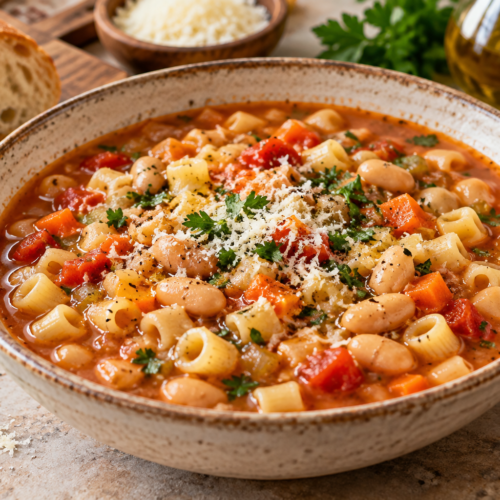
This classic pasta e fagioli is made with cannellini beans, small pasta, tomatoes and a classic Italian vegetable base. Some of the beans are mashed to a creamy consistency, no cream or flour being added. Meanwhile, garlic, rosemary and Parmesan add more flavor without being more complicated than it needs to be. The ingredients combine to make a harmonious combination of soft beans, pasta and flavorful broth.

What Makes Pasta e Fagioli Different?
One of the defining traits of traditional pasta e fagioli is its consistency. Many American restaurant versions are a tomato-based soup, but Italian versions can be much thicker, sometimes like a loose risotto. The beans add starch, which will naturally thicken the liquid, especially if a few are crushed during cooking. That results in a single, cohesive dish, the broth clinging to the pasta instead of being a thin, watery broth.
Another key difference is the role of the pasta itself. Many versions don’t boil the pasta separately and add it at the end but cook it right in the bean broth. The starch from the pasta adds extra body to the liquid and the individual flavors meld together. But it also means the pasta will continue to soak up liquid after cooking, so this is something to remember if you’re planning on having leftover pasta.
While pasta e fagioli has become a staple of Italian-American restaurants, its origins are much more deeply embedded in the regional cooking of Italy. It is part of a larger family of dishes which rely on the use of legumes, grains and vegetables to create filling meals from easily obtainable ingredients. Its versatility has kept it relevant as cooking habits and availability of ingredients have changed. Today, it is equally suitable for a meatless dinner or as the first course of a larger Italian meal.
Choosing the Best Beans
Cannellini beans are an excellent choice for this pasta e fagioli recipe because they have a mild flavor and a soft, creamy interior. They hold their shape reasonably well during cooking, yet they are easy to mash when you want to thicken the broth. Their neutral character also allows the rosemary, garlic, and tomatoes to remain noticeable. For a slightly different texture, borlotti beans, also called cranberry beans, are another traditional option.
Canned beans make this recipe practical for everyday cooking and eliminate the need for overnight soaking. Rinsing and draining them removes excess canning liquid, so you have more control over the seasoning and consistency. If you prefer dried beans, cook them until tender before beginning the recipe and reserve some of their cooking liquid. That liquid can replace part of the vegetable broth, adding extra body and bean flavor.
For this version, mashing approximately one cup of the cooked beans creates a thicker base while leaving plenty of whole beans throughout the dish. You can mash them directly against the side of the pot or use a fork in a separate bowl. Don’t blend all the beans; you want the final pasta e fagioli to have a bit of texture. One thing that makes the dish unique is the contrast of creamy broth and whole beans.
Vegetables and herbs that add flavor
This traditional Italian pasta e fagioli recipe begins with onion, carrot and celery. These vegetables gently cooked in olive oil are called soffritto, and they add sweetness, aroma and depth to the broth. Cooking them slowly gives their flavors a chance to bloom before the other ingredients come in. The idea is to cook the vegetables without too much browning.
Add this once the vegetables have started to soften as garlic cooks quickly and can become bitter if left over high heat. The fresh rosemary gives a distinct herbal note that is especially good with the white beans. Dried rosemary will also work, but should be used in smaller amounts because it is more concentrated. As it simmers, add a bay leaf to the pot for a subtle extra layer of seasoning.
The crushed tomatoes in this version add a mild tartness to balance the richness of the beans and olive oil. The tomatoes should complement not dominate the broth. The broth is vegetable to keep this recipe meatless, but you can use chicken broth if you prefer. Finally, a dash of freshly grated Parmesan rounds out the dish with a savory touch when served.
How to Make Pasta e Fagioli with a Creamy Broth
In a heavy-bottomed pot, heat olive oil over medium heat. Add the onion, carrot, and celery and stir occasionally until the vegetables are tender. This first stage of cooking usually takes about seven to eight minutes, depending on how finely the vegetables are chopped. When soft, add the garlic and rosemary and cook until fragrant for a minute or two.
Add the crushed tomatoes, cannellini beans (drained), vegetable broth and bay leaf and stir to combine. Bring the mixture to a low simmer and allow the flavors to meld for about fifteen minutes. At this stage the beans absorb some of the seasoning and the vegetables continue to soften. Taste the broth before adding additional salt, especially if your canned beans or broth already contain sodium.
Remove about one cup of beans with a little broth, mash them, and return the mixture to the pot. This step transforms the consistency without changing the character of the dish or requiring any dairy. Stir thoroughly so the mashed beans distribute evenly through the liquid. If the broth becomes thicker than you prefer, add a small amount of warm water or additional broth.
Stir frequently and cook the dry pasta right in the simmering mixture according to the package directions. Small pasta shapes like ditalini are especially good because they cook evenly and are easy to eat with a spoon. Make sure you have some extra warm broth on hand because the pasta will absorb liquid as it cooks. When the pasta is tender, remove the bay leaf and taste for seasoning. Adjust the seasoning and serve.
Traditional Italian Pasta e Fagioli Recipe
Ingredients
- 2 tbsp extra-virgin olive oil
- 1 medium yellow onion finely diced
- 2 medium carrots finely diced
- 2 celery stalks finely diced
- 3 garlic cloves minced
- 1 tsp fresh rosemary finely chopped (or ½ tsp dried)
- 1 can 14 oz crushed tomatoes
- 2 cans 15 oz each cannellini beans, drained and rinsed
- 4 cups low-sodium vegetable broth plus more as needed
- 1 bay leaf
- 1 cup dry ditalini pasta
- 1/2 tsp dried oregano
- 1/2 tsp tsp salt or to taste
- 1/4 tsp freshly ground black pepper
- 1/4 tsp crushed red pepper flakes optional
- 1/4 cup freshly grated Parmesan cheese for serving
- 2 tbsp chopped fresh Italian parsley for garnish
- Extra-virgin olive oil for finishing
Instructions
- Sauté the vegetables. Heat olive oil in a large, heavy-bottomed pot over medium heat. Add the onion, carrots, and celery. Cook for 7–8 minutes, stirring occasionally, until softened.
- Add the aromatics. Stir in the minced garlic, rosemary, and oregano. Cook for 30–60 seconds, stirring continuously to prevent the garlic from burning.
- Build the broth. Add the crushed tomatoes, cannellini beans, vegetable broth, and bay leaf. Season with salt, black pepper, and optional crushed red pepper flakes. Bring to a gentle simmer and cook uncovered for 15 minutes.
- Create a creamy texture. Remove approximately 1 cup of beans with a little broth. Mash them with a fork until creamy, then stir the mixture back into the pot to thicken the soup naturally.
- Cook the pasta. Add the dry ditalini directly to the simmering soup. Cook according to package directions, usually 8–10 minutes, stirring frequently. Add extra warm broth if the mixture becomes too thick.
- Adjust the seasoning. Remove the bay leaf and taste the broth. Add additional salt or pepper if needed. Allow the pasta e fagioli to rest for 2–3 minutes before serving.
- Garnish and serve. Ladle into individual bowls. Top with freshly grated Parmesan, chopped parsley, and a drizzle of extra-virgin olive oil. Serve warm with crusty Italian bread.
Notes
Recipe Notes
For a thicker soup: Mash additional cannellini beans or let the soup simmer briefly until it reaches your preferred consistency. For a thinner soup: Add warm vegetable broth, approximately ¼ cup at a time. Make ahead: Prepare the bean and vegetable base in advance, then cook the pasta directly in the soup when ready to serve. Storage: Refrigerate leftovers in an airtight container for up to 3–4 days. The pasta will continue absorbing broth, so add a little water or broth when reheating. Vegetarian option: Use vegetable broth and vegetarian hard cheese instead of traditional Parmesan, or omit the cheese.Which Pasta Is Best?
One of the most practical choices for traditional pasta e fagioli is ditalini, a short tubular pasta that matches the size of the beans. The small pieces are evenly distributed through the broth, so it’s easy to enjoy both ingredients together. Elbow macaroni, small shells and other tiny pasta shapes are good choices, too. Whichever shape you choose, be sure to check the cooking time, and adjust the amount of liquid accordingly.
In some Italian kitchens, pasta e fagioli is prepared using pasta mista, a mixture of small pasta shapes traditionally associated with using what was available in the pantry. This approach works best when the pieces have similar cooking times. If you combine shapes that cook very differently, you may end up with some pieces overcooked and others still firm. The simplest choice for consistent results is a single small pasta shape.
Pasta e Fagioli Ways to Thicken
The perfect texture is largely a matter of personal taste and the timing of when you will be serving. For a soup-like version, add enough broth to keep the beans and pasta suspended in a generous amount of liquid. If you prefer a thicker preparation, allow the mixture to simmer briefly after the pasta finishes cooking. Remember that the broth will continue thickening as the pasta absorbs moisture.
A useful technique is to reserve a cup of warm broth before adding the pasta. You can then introduce small amounts during cooking instead of adding too much liquid at once. This gives you better control over the final texture and helps prevent the pasta from sticking to the bottom of the pot. Stirring regularly is especially important during the final few minutes.
What to Serve with Traditional Italian Pasta e Fagioli
Pasta e fagioli is substantial enough to serve as a complete meal, particularly when prepared with plenty of beans and vegetables. A simple green salad with olive oil and lemon juice gives a fresh contrast to its creamy texture. Crusty Italian bread is another good accompaniment, especially if you prefer a slightly brothier preparation. If you’re serving a larger dinner, smaller portions can be served before a roasted vegetable or meat course.
To serve, drizzle each bowl with a little extra-virgin olive oil, and sprinkle with freshly grated Parmesan if you like. Fresh chopped Italian parsley for a fresh finish and crushed red pepper flakes for heat if you like. These additions should be fairly light so the beans, vegetables and rosemary are the star flavors. Serve the pasta e fagioli promptly for the most balanced pasta texture.
Can You Make Pasta e Fagioli Ahead of Time?
The bean and vegetable base can be prepared in advance, making this recipe particularly convenient for meal planning. Cook the mixture through the simmering stage, mash the reserved portion of beans, and refrigerate the base in a covered container. When you are ready to eat, reheat the mixture until simmering and add the pasta. This approach helps prevent the pasta from becoming overly soft during storage.
If you have already cooked the complete dish, refrigerate leftovers promptly in an airtight container and use them within three to four days. The broth will be absorbed more by the pasta overnight, so expect a thicker consistency. Reheat individual portions with additional water or broth until steaming hot throughout. For longer storage, freezing the bean base without the pasta generally produces better results than freezing the completed dish.
A Few Final Tips for Perfect Pasta e Fagioli
The most reliable way to prepare traditional Italian pasta e fagioli is to pay attention to the broth throughout cooking. The beans themselves add thickness and the pasta will also release more starch so the amount of liquid you need can vary from batch to batch. Add the broth gradually so you get the consistency right and don’t water out the seasoning too much. A final taste before serving helps to make sure the garlic, herbs, tomatoes and beans stay balanced.
But this recipe has some leeway for minor adjustments without losing its essential character. You can substitute cannellini beans for borlotti beans, ditalini for pasta mista and cut back on the tomato for a lighter-colored broth. What counts is giving the beans, pasta and aromatics a chance to work with each other, not as separate parts. With those fundamentals in place, pasta e fagioli becomes a dependable Italian dish that can be adapted to different tastes and occasions.